Protect your Office or Factory building’s foundation and masonry from the damaging effects of rising and lateral damp. Utilizing advanced chemical damp proof courses and high-performance moisture barriers, we preserve structural value and prevent wall deterioration.
Unlike standard painting, dampproofing is a structural intervention. Property managers look for adherence to building standards to ensure warranties and insurance claims remain valid.
Adherence to South African National Standards governing damp proof courses (DPC) and moisture barrier installations.
Ensuring replastering over DPC chemical injections follows standard isolation cuts so moisture cannot bridge back up the plaster.
Standard compliance with guidance from the Dampproofing & Waterproofing Association of Southern Africa.
Damp in masonry walls leads to structural damage, health risks, and financial loss.
Moisture causes paint to bubble, blister, and peel away.
As damp evaporates from the wall surface, it deposits hygroscopic salts.
Internal steel, wall ties, and electrical conduits embedded in damp walls will oxidize, rust, and expand, causing cracks.
Persistent damp creates an ideal environment for toxic mold spores (like black mold) and mildew to flourish on wall surfaces and behind furniture.
Mold spores and dust mites thrive in high-humidity environments, triggering asthma attacks, chronic coughing, sinus congestion, eye irritation, and skin rashes.
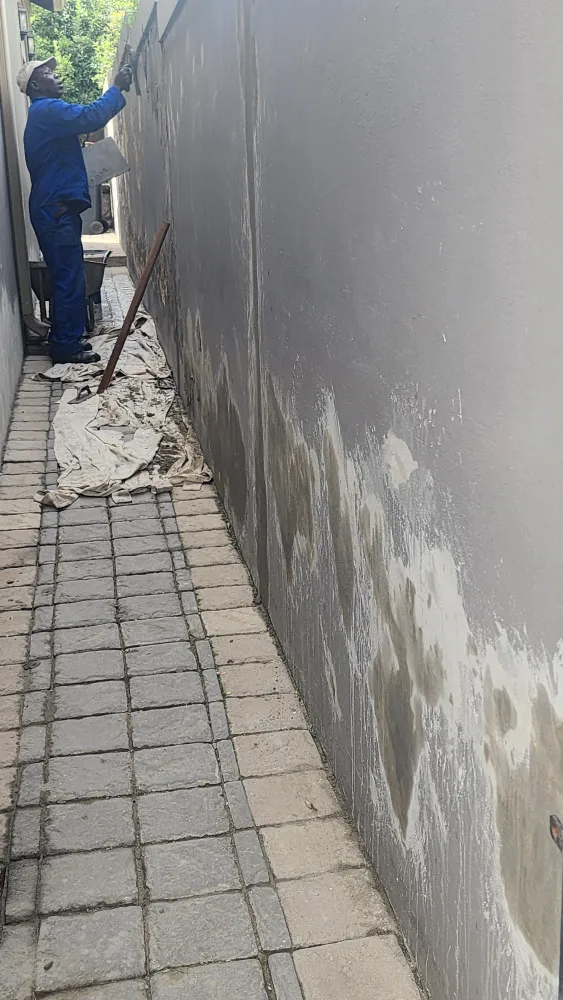
Painting a 5,000sqm warehouse requires specialized equipment and expertise. We do not use residential tools on commercial sites.
Plaster degrades, softens, and separates from the underlying brickwork (spalling), leading to unsightly surface loss.
Unresolved moisture traps biological decay, creating a permanent, musty smell that penetrates furniture, carpets, and fabrics.
Damp walls conduct heat far more rapidly than dry walls, significantly reducing the building's thermal efficiency and driving up heating and cooling costs.
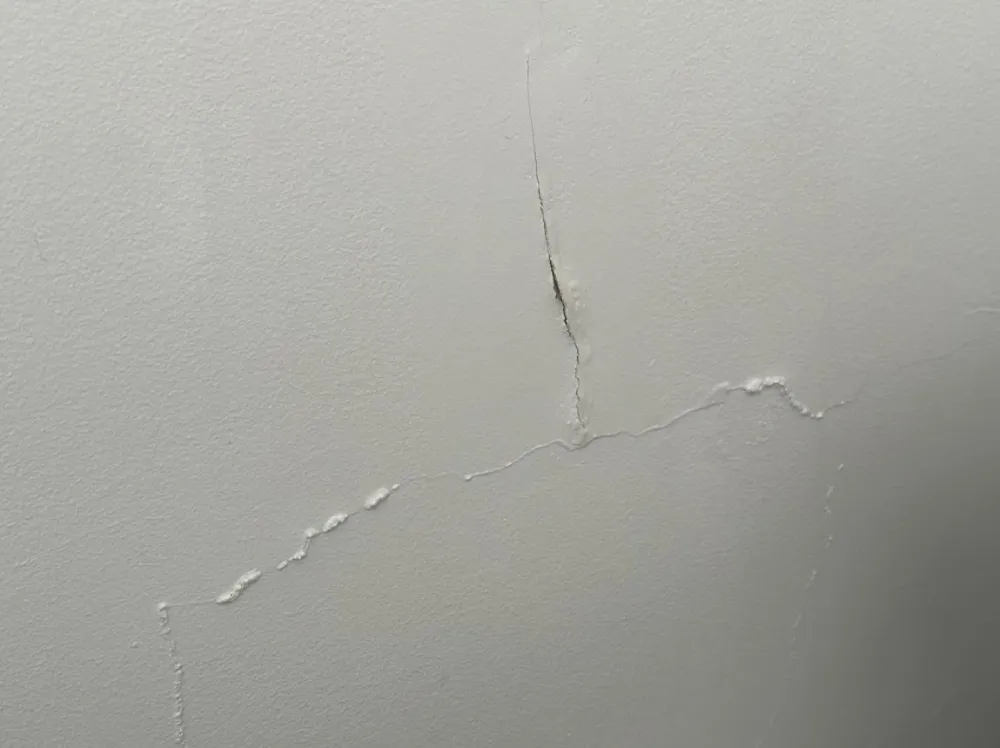
Exterior View
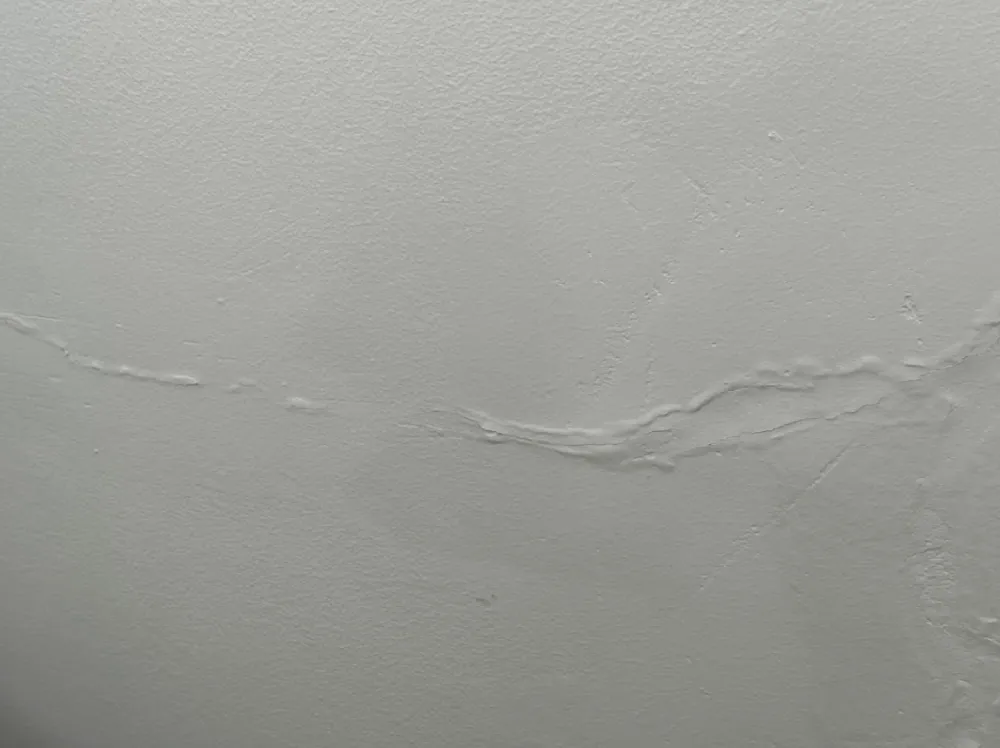
Exterior View
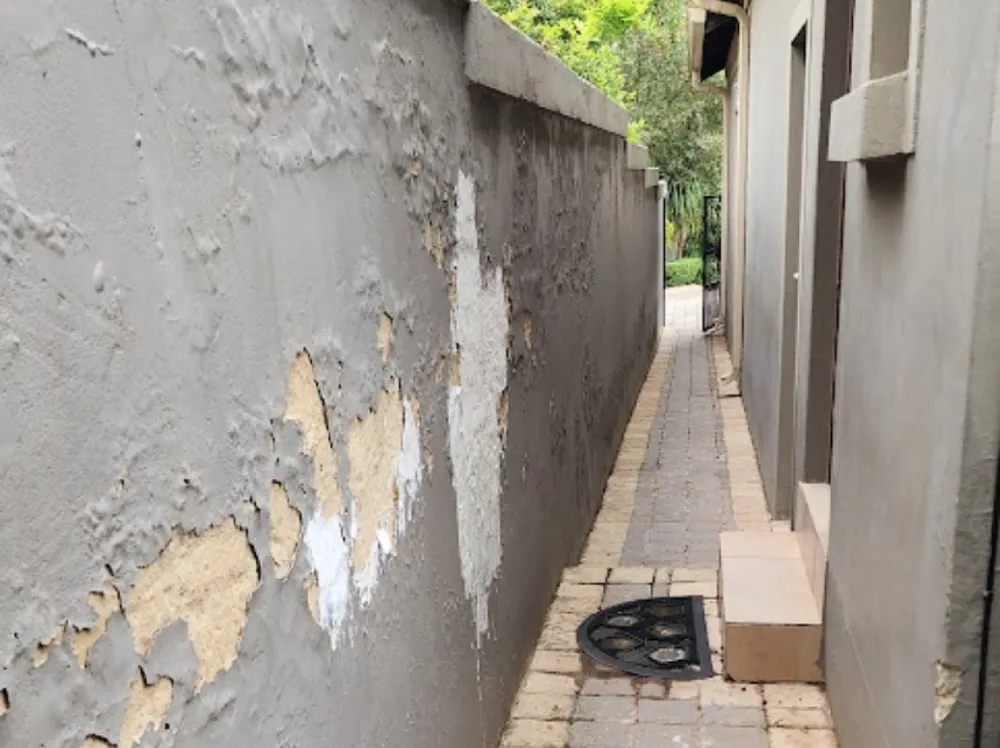
Exterior View